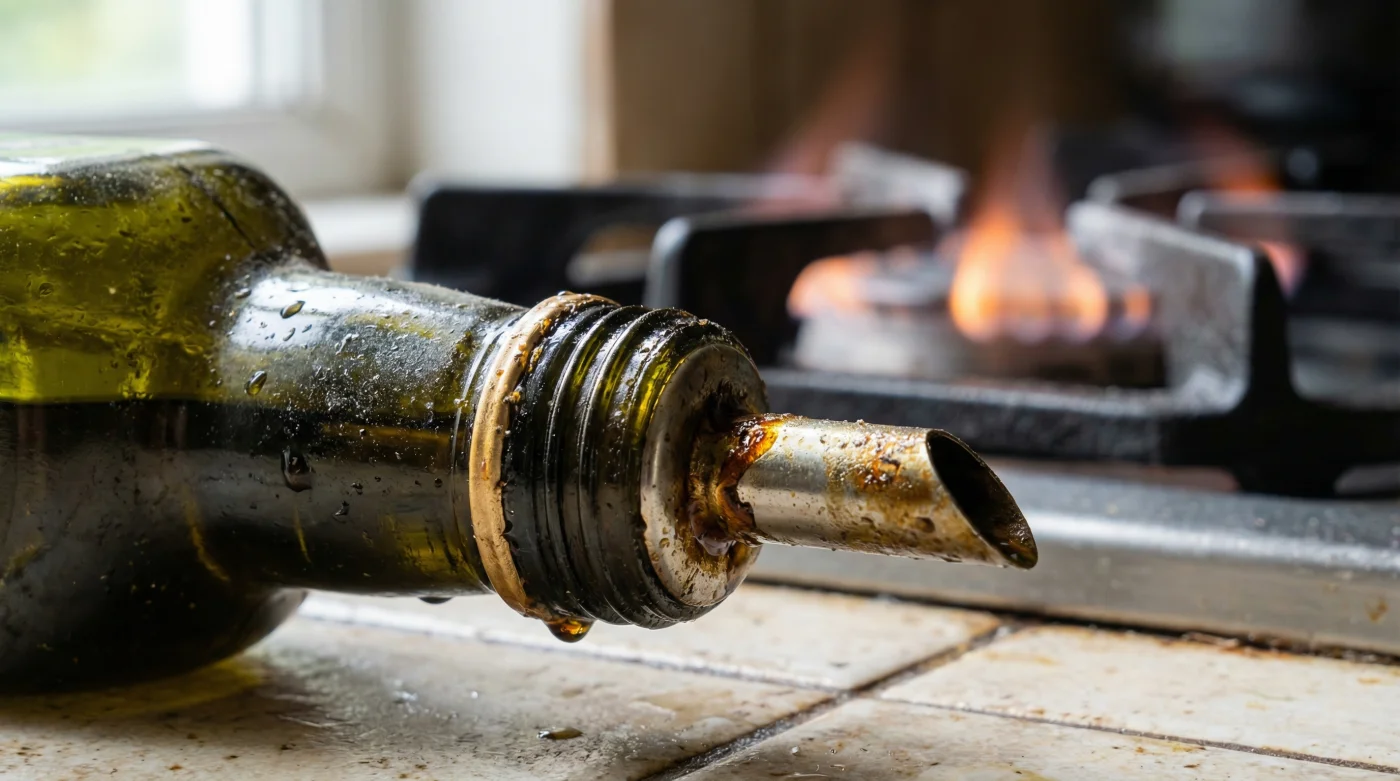
You know the rhythm of a Tuesday night dinner. The heavy cast iron skillet warms up, garlic waits on the cutting board, and your hand naturally reaches to the right of the stove. There it sits—your prized bottle of extra virgin olive oil, glowing faintly green in the ambient kitchen light. It is convenient. It feels intuitive.
But inside that bottle, something far less comforting is happening. The ambient heat radiating from your burners, combined with the scattered light of your kitchen, is quietly breaking down the fragile lipids. Heat accelerates chemical decay, turning a vibrant, health-boosting fat into a rancid, inflammatory liquid.
You probably thought keeping it near the stove made you an efficient cook. Every cooking show features a gleaming bottle of oil resting right beside the bubbling pots. Yet, that cinematic setup is a culinary illusion, built for aesthetics rather than food science.
The reality is that extra virgin olive oil is effectively a fresh fruit juice. When you leave it baking next to a 350-degree oven or a simmering burner, the delicate phenols snap apart. Within just a few weeks of this exposure, the oil doesn’t just lose its flavor; it fundamentally turns against your body.
The Sunburned Fat
Think of extra virgin olive oil as pale, unprotected skin under a midday sun. It lacks the heavy, industrialized armor of highly refined seed oils. The very elements that make it valuable—the volatile organic compounds, the delicate antioxidants, the peppery finish—are the exact things that make it highly unstable.
When you store it near the stove, you subject it to thermal shock. Oxidation isn’t a slow fade; it’s a structural collapse. Oxygen, light, and heat team up to sever the fatty acid chains. You might not notice the shift immediately, but the oil grows heavy and flat, smelling more like old crayons or stale walnuts than fresh cut grass.
Understanding this system changes everything. Instead of viewing your oil as a pantry staple with an infinite shelf life, you start treating it like the perishable, living ingredient it actually is. The flaw isn’t the oil; the flaw is treating a sensitive botanical extract like it’s a jar of salt.
Elena Rostova, a 42-year-old olive oil sommelier and importer based in Brooklyn, spends her life chasing the perfect harvest. She notes that the hardest part of her job isn’t sourcing the oil from small estates in Tuscany or California; it’s watching American consumers systematically destroy it in their kitchens. “I visit these gorgeous homes,” Elena explains, “and I see a sixty-dollar bottle of early-harvest Coratina sitting right above a six-burner gas range. It breaks my heart. By the time they pour it over their tomatoes, they are basically eating lamp oil.” It is a shared secret among tasters: the finest olive oil in the world becomes ordinary, and eventually toxic, if it sits next to the heat.
For the High-Volume Home Cook
If you run through a liter of oil every two weeks, your primary enemy isn’t time; it’s immediate environmental stress. You need a setup that allows for quick access without the burn.
The solution here is decanting. Keep the large tin or dark glass bottle in a cool, low cabinet. Pour just a few days’ worth into a smaller, opaque dispenser that you keep on the counter, well away from the stove’s heat radius. Keep the bulk supply dark, protecting the mother lode from the chaotic temperature swings of your kitchen.
For the Premium Purist
You buy the good stuff. The early harvest, the single-estate, the bottles wrapped in gold foil or thick black glass. For you, oxygen is just as destructive as heat.
- Social Security administration initiates silent benefit reductions for new retirees.
- Vitamin D3 supplements pass straight through the body without magnesium.
- Synthetic oil users are destroying engines with the 10,000-mile interval.
- Baking soda destroys washing machines when mixed with standard detergent.
- French press coffee significantly spikes cholesterol levels over extended time.
The Dark Storage Protocol
Relocating your oil doesn’t require a kitchen remodel. It requires a mindful adjustment of your workflow.
Find a cabinet that sits below the waist, far from the oven or the dishwasher. Warm air rises, meaning your upper cabinets are naturally hotter. Choose the coolest lower corner to serve as your new oil sanctuary.
You want a spot that stays dark and consistently cool. The ideal temperature range is between 55 and 65 degrees Fahrenheit.
When you are ready to cook, pull the bottle out, pour what you need, and immediately put it back. Treat it exactly like you would treat a carton of fresh milk.
- The Container: Always buy oil in dark green glass, opaque ceramic, or tin. Clear glass is a fast track to light-induced rancidity.
- The Dispenser: If using a pour spout, ensure it has a flap closure to prevent constant air exchange.
- The Temperature: Target 60°F. Never store olive oil in the refrigerator, as condensation can form inside the bottle and introduce water, causing mold.
- The Timeline: Consume an open bottle within 30 to 60 days.
Reclaiming the Harvest
Moving a glass bottle from the counter to a dark cabinet seems like an almost invisible domestic adjustment. Yet, this tiny shift honors the incredible effort required to press oil from a bitter fruit.
You stop consuming compromised, inflammatory fats and start absorbing the pure, vibrant energy of a well-preserved harvest. It forces you to pause, to retrieve the oil with intention, and to smell the bright, grassy, and peppery notes before they hit the pan.
Cooking becomes less about mindless routine and more about protecting the integrity of your ingredients. You aren’t just saving the oil; you are protecting the foundation of your health, one careful pour at a time.
“Olive oil is a living juice, and like any fresh juice, it demands darkness and cool stillness to survive the wait.”
| Storage Method | Chemical Impact | Added Value for You |
|---|---|---|
| Above the Stove | Rapid oxidation and polyphenol destruction | None. Converts healthy fats into inflammatory compounds. |
| Clear Glass on Counter | UV light breaks down chlorophyll and fatty acids | Visual appeal, but sacrifices flavor and health benefits within weeks. |
| Dark Cabinet (Below Waist) | Stable temperature preserves antioxidant integrity | Maintains peppery finish, fresh grassy aroma, and maximum nutritional value. |
Frequently Asked Questions
How can I tell if my olive oil has gone bad?
Smell it. Rancid oil loses its grassy aroma and smells like old walnuts, crayons, or wet cardboard.Can I keep my everyday cooking oil in a clear cruet?
Only if you use it within a week and keep it away from direct sunlight. Otherwise, the light will degrade the antioxidants rapidly.Does the type of olive oil matter for storage?
Yes. Unfiltered or early-harvest extra virgin oils have more particulate matter and decay faster than refined oils if exposed to heat.Is it safe to store olive oil in the refrigerator?
It is not ideal. Cold causes the oil to solidify, and the repeated temperature changes when bringing it to room temperature can create condensation inside the bottle.What is the absolute best container for bulk olive oil?
A sealed stainless steel fusti or a dark tin, kept in a pantry that never exceeds 65 degrees Fahrenheit.