You stand in the warm, humid air of the laundry room, holding a familiar yellow box of baking soda. The internet promised you this was the hidden trick to perfect laundry. A simple, natural scoop to brighten the dull whites, banish the lingering gym sweat, and outsmart the chemical-heavy detergent industry. It feels like a small, domestic victory as the bright white powder tumbles into the plastic dispenser drawer.
But beneath the rhythmic hum and slosh of the wash cycle, a quiet, expensive degradation is taking place. That innocent white powder is interacting with the synthetic enzymes in your liquid detergent, creating a highly alkaline slurry that the internal components of your machine were never designed to handle. You expect crisp, fresh linens, but what you are actually doing is chemically baking the vital rubber seals that keep the water inside the drum.
It happens slowly, wash after wash, cycle after cycle. The chemical reaction strips the natural flexibility from the internal gaskets. Until one day, you step into the laundry room and feel a cold puddle spreading silently across your floorboards.
The Sandpaper In The Slurry
The sandpaper in the slurry is what ultimately kills the appliance. Modern washing machines, especially high-efficiency front loaders, rely on pliable, supple rubber door boots to maintain watertight integrity during violent, 1,200 RPM spin cycles. These seals need to flex, compress, and breathe with the movement of the heavy, wet clothes.
When you introduce sodium bicarbonate to modern synthetic detergents, you disrupt the careful pH balance engineered by the manufacturer. Baking soda is heavily abrasive. When it fails to dissolve completely—which happens frequently in the cold water washes we rely on for energy efficiency—it acts like microscopic grit rubbing endlessly against the rubber collar.
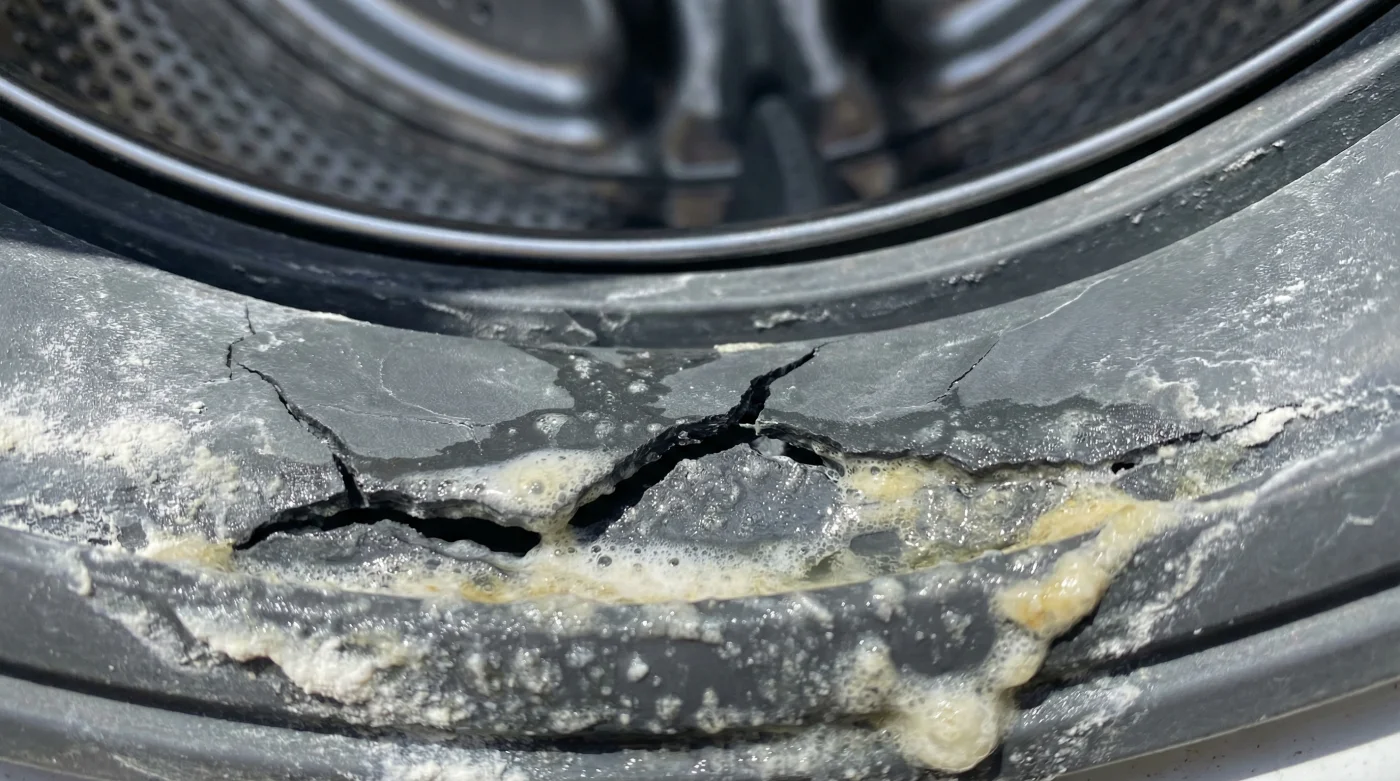
Worse, the chemical reaction between the high-alkaline soda and the modern surfactants causes the rubber to rapidly lose its plasticizers. The seal dries out completely, hardens like old clay, and eventually splinters under the pressure of the spinning drum.
Marcus Vance, a 48-year-old appliance technician in Chicago, spends his Tuesdays replacing ruined door boots on high-efficiency washing machines. He will tell you that the internet’s favorite laundry stripping hack is the single most profitable trend for his independent repair business. He points out the thick, crystallized white crust wedged deep in the folds of a shattered rubber gasket, noting that while the family’s clothes might smell faintly of nothingness, the machine itself has aged a decade in just six short months.
Adjusting Your Approach
If the goal is to pull trapped odors from fabrics without destroying a thousand-dollar appliance, you have to examine what you are actually trying to achieve. Moving past the viral hacks requires looking at the specific laundry problems you face and treating them with precision, rather than a blanket approach.
For the Odor Fighter
You are likely dealing with trapped bacteria clinging to the synthetic fibers of workout gear. Instead of relying on a harsh alkaline boost to scrub the smell away, you need to alter the biological environment. An enzyme-based sports detergent works at a molecular level to break down the proteins in sweat. It requires no extra abrasive powders, just the right amount of time in the water.
Trust the modern liquid enzymes to do the heavy lifting. They are formulated to rinse away clean without leaving a gritty residue inside the drum or the drain pump.
For the Hard Water Victim
- Social Security administration initiates silent benefit reductions for new retirees.
- Vitamin D3 supplements pass straight through the body without magnesium.
- Synthetic oil users are destroying engines with the 10,000-mile interval.
- Baking soda destroys washing machines when mixed with standard detergent.
- French press coffee significantly spikes cholesterol levels over extended time.
You need a dedicated liquid water softener that traps calcium and magnesium ions before they attach to your fabrics. Keeping the internal pipes clear prevents the stiff, scratchy texture on your towels and saves the machine’s heating element from burning out prematurely.
The Mindful Application
Reversing the damage and protecting your machine requires a permanent shift in your weekly habits. It is about doing less, but doing it with absolute intent.
Stop the experimental pantry mixing and trust the chemistry of your chosen soap. The engineers who designed your machine built it to process specific, highly concentrated liquids.
- Measure liquid detergent using an actual measuring tablespoon, completely ignoring the massive plastic cup provided by the brand. Two tablespoons are enough to clean a heavily soiled load.
- Wash your machine’s rubber gasket weekly with a damp microfiber cloth and plain warm water to remove any lingering detergent residue from the folds.
- Leave the machine door wide open after every cycle so the interior drum and the delicate rubber seals can dry completely in the ambient air.
- Run a dedicated machine-cleaning tablet through the longest, hottest water cycle once a month to flush the drain pump and hoses.
The Tactical Toolkit is simple. Keep a small, dry microfiber cloth resting on top of the machine. Set your water temperature to exactly 60 degrees Fahrenheit for darks, and 90 degrees for heavily soiled sheets. Only use products clearly marked as high-efficiency if you own a front-loading model.
The Bigger Picture
There is a profound sense of relief in realizing you do not need to outsmart the appliances in your home. You do not need to mix secret recipes or raid the baking pantry to force them to perform their basic duties.
When you stop fighting the engineering, the laundry routine stops being a risky chemistry experiment and returns to being a simple, grounding chore. The rubber seals remain supple, the utility floor remains completely dry, and the machine simply hums along in the background, working exactly as intended.
Letting go of the viral hack is powerful. It allows you to trust the process, giving you back your peace of mind and ensuring the expensive machine in your home is safe from the very things you mistakenly thought were helping it thrive.
Machines break when we ask them to process the past instead of trusting the chemistry of the present.
| Key Point | Detail | Added Value for the Reader |
|---|---|---|
| Chemical Friction | High-alkaline soda degrades synthetic rubber plasticizers. | Saves you from a $300 door boot repair bill. |
| Abrasive Wear | Undissolved powder acts like microscopic sandpaper. | Keeps the watertight seal intact for years. |
| Enzyme Interference | Alters the pH balance required by modern liquid detergents. | Ensures your soap actually cleans your clothes. |
Frequently Asked Questions
Can I use vinegar instead of baking soda? Yes, but keep it in the fabric softener dispenser so it does not mix directly with the alkaline detergent during the wash cycle.
What if my clothes still smell sour? Sour smells usually indicate a dirty drain pump or a moldy gasket, not a lack of detergent power. Clean the machine itself first.
Does this apply to top-loading machines? Top loaders are slightly more forgiving due to their water volume, but the chemical degradation of internal rubber hoses still occurs over time.
How do I fix a stiffened rubber seal? Once the plasticizers are chemically stripped from the rubber, it cannot be reversed. The seal must be replaced by a technician.
Are laundry pods safer for the machine? Pods are pre-measured, which prevents overdosing, but their plastic casings can sometimes fail to dissolve in cold water, creating a different set of blockages.