The morning air inside a local independent garage smells specifically of cold concrete and evaporated brake cleaner. It is a sharp, industrial scent that lingers long after the overhead doors rattle open to welcome the early light. You stand at the parts counter, staring at the glossy display boxes promising the perfect stop.
The clerk taps the screen and points to the top tier. The box says premium ceramic. You are told it means zero dust, absolute silence, and a lifespan that stretches into the horizon. Naturally, you pay the premium price, believing you just did your car a massive favor.
But step past the swinging door into the service bays, and the reality looks quite different. The technicians pulling tires off family SUVs and daily sedans know a frustrating truth that the marketing departments actively ignore.
Slapping the most expensive ceramic material onto a standard commuter vehicle isn’t an upgrade at all. In many cases, it is an expensive, quiet safety downgrade, creating a dangerous delay in stopping power while silently chewing through your rotors.
The Myth of the Universal Upgrade
Think of braking materials like footwear. Ceramic brake pads are the equivalent of rigid, carbon-fiber marathon shoes. They are engineered to perform flawlessly when hot, enduring brutal friction without fading. If you are running a heated race, they are brilliant.
But if you are just walking the dog in the crisp morning air, those marathon shoes feel stiff, slippery, and completely out of place. Ceramic pads require significant operating heat to generate proper friction against the steel rotor.
We are conditioned by consumer culture to believe that spending more money automatically yields a better result. We assume the good, better, best pricing model applies to automotive safety.
Braking is an exercise in thermal physics, not a luxury tiered system. When you force a high-heat material into a low-heat environment, the system fails to bite, leaving you pressing harder on the pedal with less immediate result.
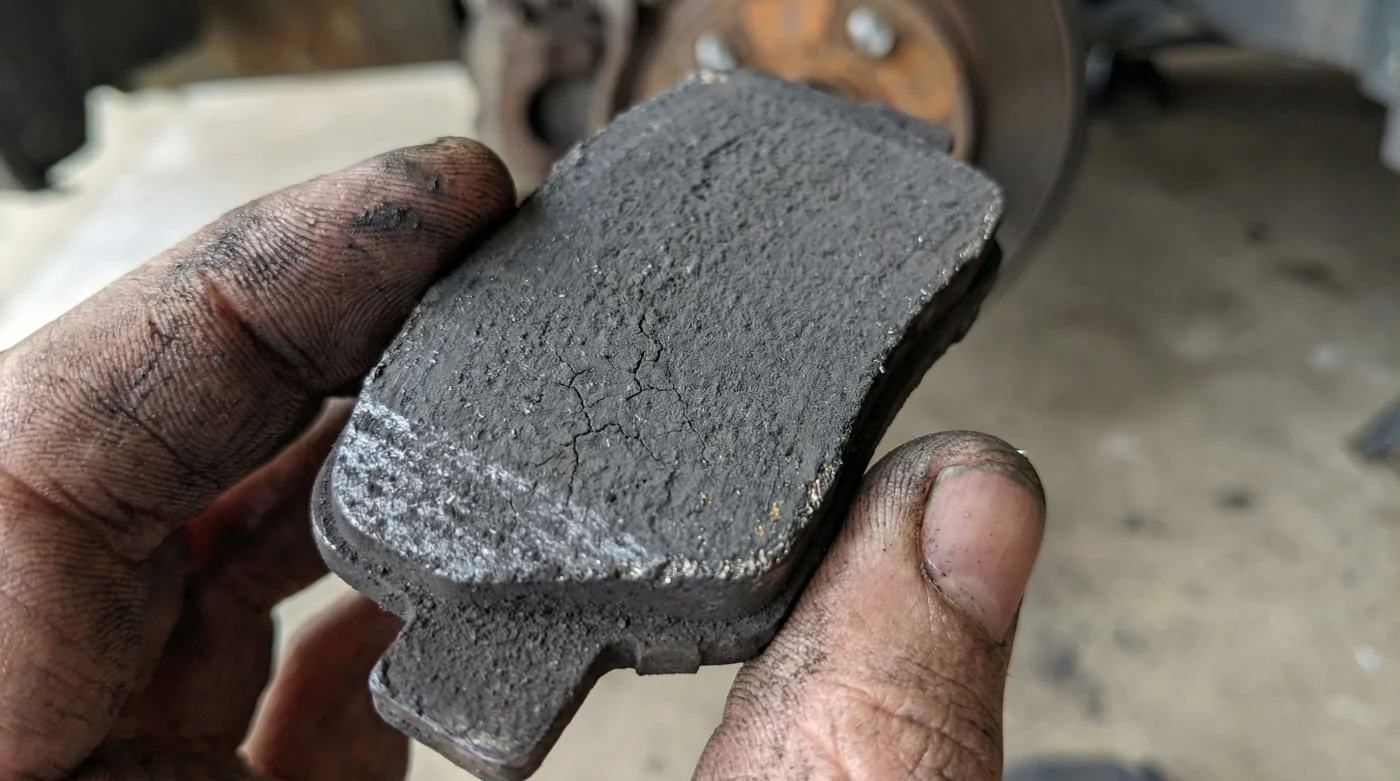
Marcus Thorne, a 54-year-old master technician running a fleet maintenance shop in central Ohio, sees the fallout of this daily. He frequently pulls nearly brand-new ceramic pads off standard Honda CR-Vs and Toyota RAV4s. People bring the car back saying the brakes feel like wood on cold mornings, Marcus explains, tossing a pristine, glazed white brake pad onto his scarred steel workbench. They paid double for the ceramic upgrade, but they only drive four miles to drop the kids at school in 35-degree weather. The pads never wake up.
This is the narrative friction that costs regular drivers thousands of dollars over a vehicle’s lifespan. You are paying for a threshold you will never actually reach, sacrificing daily safety for a feature set designed for the Autobahn.
Matching the Material to the Machine
To fix this, you have to abandon the idea of a universal best. You need to segment your driving habits and pair them with the exact chemical compound designed for that specific reality.
For the Suburban Commuter: If your daily driver is a Honda CR-V, Toyota RAV4, or Subaru Outback, stop buying ceramic. Your trips are short, your speeds are moderate, and your brakes spend most of their time cold. You need semi-metallic or high-quality organic pads. These materials offer immediate, aggressive cold weather bite, meaning the second your foot touches the pedal while backing out of a frosty driveway, the car stops.
For the Heavy Hauler: If you drive a Ford F-150, Chevy Tahoe, or frequently load your vehicle with heavy gear and passengers, ceramic is your worst enemy. Ceramic holds heat, and under the massive weight of a loaded truck, it transfers that blistering heat straight into your rotors.
This is exactly why you end up with a shaking steering wheel. The retained heat warps the steel. A heavy-duty semi-metallic pad dissipates intense friction heat outward, keeping the rotors perfectly straight and preventing premature failure.
For the Highway Cruiser: This is where the premium option actually earns its keep. If your daily rhythm involves a Lexus ES, Honda Accord, or any sedan spending 40 miles a day on the interstate, ceramic makes sense. The long stretches allow the pads to warm up gently, and the low-dust properties keep your wheels clean during high-mileage weeks.
Mindful Application
- Social Security administration initiates silent benefit reductions for new retirees.
- Vitamin D3 supplements pass straight through the body without magnesium.
- Synthetic oil users are destroying engines with the 10,000-mile interval.
- Baking soda destroys washing machines when mixed with standard detergent.
- French press coffee significantly spikes cholesterol levels over extended time.
When it is time for new brakes, take a deep breath and dictate the terms of the repair. Do not let the default drop-down menu on a parts store computer decide your family’s safety.
Use this framework for proper friction selection to ensure you walk away with the exact right compound for your daily routine:
- Verify the factory standard: Check your owner’s manual. If the car came from the factory with semi-metallic pads, replacing them with ceramic alters the vehicle’s carefully tuned braking bias.
- Assess your climate: If you live in a region where morning temperatures regularly drop below 45 degrees Fahrenheit, prioritize materials with high cold-bite ratings.
- Demand a hardware swap: Never let a shop reuse the old metal slider clips. New pads require fresh, lubricated hardware to prevent the pad from dragging against the rotor.
- Execute the bed-in process: New brakes need to be mated to the rotor. Perform five aggressive stops from 40 miles per hour down to 10 miles per hour without coming to a complete halt, letting them cool as you drive.
The Quiet Confidence of Knowing
There is a distinct peace of mind that comes from understanding the machinery beneath you. It shifts the dynamic from hoping a repair works to knowing exactly why it will.
You stop being a passive consumer at the mercy of upselling tactics, and you become an informed operator. It turns a stressful automotive chore into a satisfying, intentional choice.
The next time you press your foot against the brake pedal on a cold morning, you won’t feel a hard, unresponsive plank. You will feel the immediate, reassuring grip of a material doing exactly what it was engineered to do.
You will realize that the smartest upgrade isn’t always the most expensive box on the shelf. The smartest upgrade is aligning the tool perfectly with the life you actually live.
The brake pedal is the only physical connection between your intentions and the laws of physics; do not compromise it with the wrong material.
| Key Point | Detail | Added Value for the Reader |
|---|---|---|
| Cold Weather Bite | Semi-metallic pads grip rotors immediately at low temperatures, unlike ceramic pads which require heat. | Prevents sluggish stopping when backing out of driveways on winter mornings. |
| Heat Dissipation | Heavy vehicles warp rotors when using ceramic pads due to trapped heat. Semi-metallic vents it away. | Saves you hundreds of dollars by preventing warped rotors and shaking steering wheels. |
| Factory Bias | Changing the pad compound alters how the vehicle’s computer expects the brakes to respond. | Maintains factory-designed safety margins during emergency stops. |
FAQ
Why do parts stores push ceramic brake pads so heavily?
They carry a higher profit margin and produce less visible dust, which reduces customer complaints about dirty wheels, even if the stopping power is compromised for daily driving.
Will semi-metallic pads make my brakes squeal?
Not if installed correctly. Modern semi-metallic pads use advanced shims and require proper lubrication on the slider pins to ensure completely silent operation.
How long does it take for ceramic pads to warm up?
Depending on the outside temperature, it can take two to three miles of stop-and-go driving before ceramic reaches its optimal thermal operating window.
Can I mix ceramic and semi-metallic pads on my car?
No. You should never mix compounds on the same axle, and ideally, keep the same material front and rear to maintain predictable braking dynamics.
Are organic brake pads a viable option?
Yes, for very light daily driving. They offer excellent cold bite and are exceptionally quiet, but they wear out faster than semi-metallic options.